
Iran and Israel: A Conflict on the Brink”
Introduction
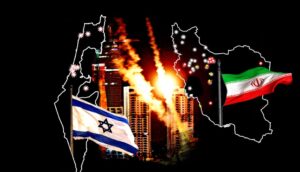
In the heart of the Middle East, a decades-long shadow war between Iran and Israel has reached a dangerous tipping point. A conflict on the brink is also known as a proxy war. This conflict started between Israel and Iran. Iran is a Muslim country, which is represented by the Islamic Republic of Iran. In Iran, 90-95% of the people are Shia Muslim. During the Israel and Palestine conflict, Iran was back to Palestine. Too many reasons have been created in the Iran-Israel conflict. With a headache flaring, Syria, Lebanon, and Gaza, both nations, were warning each other but not being real; however, that could entire Gulf and Middle East, and beyond.
. Origins of the Iran–Israel Rivalry
Their relationship underwent a radical transformation during the 1979 revolution; Tehran started supporting Palestinians. Because Iran has no diplomatic relations with Israel, even though Iran still has not accepted Israel as a republic, Israel stated that Iran threat to the stability of the Middle East. For years following the 1979 revolution that brought Ayatollah Khomeini to office, the two ostensibly hostile governments had a mutually advantageous alliance.
The turning point: Iranian Islamic Revolution
1. Protests and Public Outrage:
Mass demonstrations against the Shah’s reign helped the revolution gain traction. These rules, from 1941 to 1979, are very highlighted.
1.1: Rise to power;
After his father, M. Reza Pahlavi, is represented as a Shah, his father, Reza Shah Pahlavi, was powerful enough to bow out to the British during World War 2 in 1941. Western Power was supported especially by the United States of America and the United Kingdom because of Iran’s oil reserves and strategic location.
2. The White Revolution and Modernization;
The White Revolution was initiated by Shah Muhammad Reza Pahlavi very wildly in Iran. It began January 26, 1963. Through a number of social and economic changes, such as land redistribution, it sought to quickly modernize and westernize Iran the women struggling and facing a lot of issues with land reform. illiteracy, industries, women’s rights, and also saw the Westernization that threatens Islam and demolishes the Islamic culture.
3. Downfall;
The downfall began with Muhammad Reza Shah Pahlavi rule in Iran. by the late 1970s, economic hardship, political representation, and religious opposition. The religious leader Ayatollah Khomeini.
*Fundamental Problems That Fuel the Conflict
- Nuclear weapons: Israel’s fear of a nuclear Iran
- Why does Israel fear nuclear Iran?
Iran’s nuclear program has long been seen by Israel as an existential threat. Iran says the nuclear program is for peace. Israel views a nuclear-armed Iran as a direct threat to its existence, although Iran asserts that its nuclear aspirations are peaceful. But why does Israel care so much? This blog examines the strategic, intellectual, and historical justifications behind Israel’s concerns.
Iran’s Hateful Phraseology Toward Israel
Iran does not accept Israel as a state. Ayatollah Khamenei has repeatedly called for Israel’s destruction. Iran was also supporting Hezbollah, Hamas, which were attacked by Israel before as well. These proxies might be strengthened by a nuclear-armed Iran, greatly increasing the risk of regional confrontations. A nuclear shield could embolden Tehran to escalate asymmetric warfare without fear of direct retaliation.
Israel’s strategy against Iran’s nuclear program
Israel is strict on Iran, 13 Jun 2025, on the Iranian nuclear facility and the scientist, and has senior armed officers. Covert operations, diplomacy, cyberwarfare, military threats, and regional alliances are all part of this strategy.
The risks of a nuclear-armed Iran
The Iranian nuclear weapon is not just for destroying global warming; it is going to cause a world war. It is a danger for Israel and also the Gulf countries. All Gulf countries may be seeking nukes. Iran has demanded that the “Zionist regime” be overthrown on numerous occasions. Iran may use a nuclear weapon as a shield.
Legal Implications;
The tension between Iran and isreal war there is raising legal questions on international law. If the war breaks out, could either both could be liable to face criminal war charges.
Iran’s Nuclear Program & Violations of International Law
Iran stated that the nuclear program is for peaceful activity, but another country says that the Iranian nuclear program is dangerous for almost every country, especially Israel. The United States and EU members argue that Iran violated all the terms of the international agreement. Signing the Nuclear Non-Proliferation Treaty (NPT), which Iran signed in 1970, allows civilian nuclear technology, avoids the development, and allows IAEA inspections.
Legal obligations;
Iran is bound by the international agreement and frameworks for the regulation of its nuclear program. The legal obligations under international law, which are related to human rights and international humanitarian law, also include obligations under treaties, customary international law, and the UN Security Council.
conclusion
The Iran-Israel dispute is a powder keg with worldwide ramifications, not just a local feud. From the ideological foundations of the Islamic Revolution to Iran’s nuclear aspirations and Israel’s existential concerns, this conflict has erupted into clandestine operations, proxy conflicts, and legal disputes under international law.
Iran’s nuclear brinkmanship and support for Hezbollah, Hamas, and other extremist organizations have made the Middle East a hotbed of conflict. Israel has responded to what it perceives as an existential danger with cyberwarfare, diplomatic isolation campaigns, and preemptive strikes, posing serious moral and legal issues.


Impressive
Leave the iran